James A. Silver Classic Gentleman Yacht En vente
Description
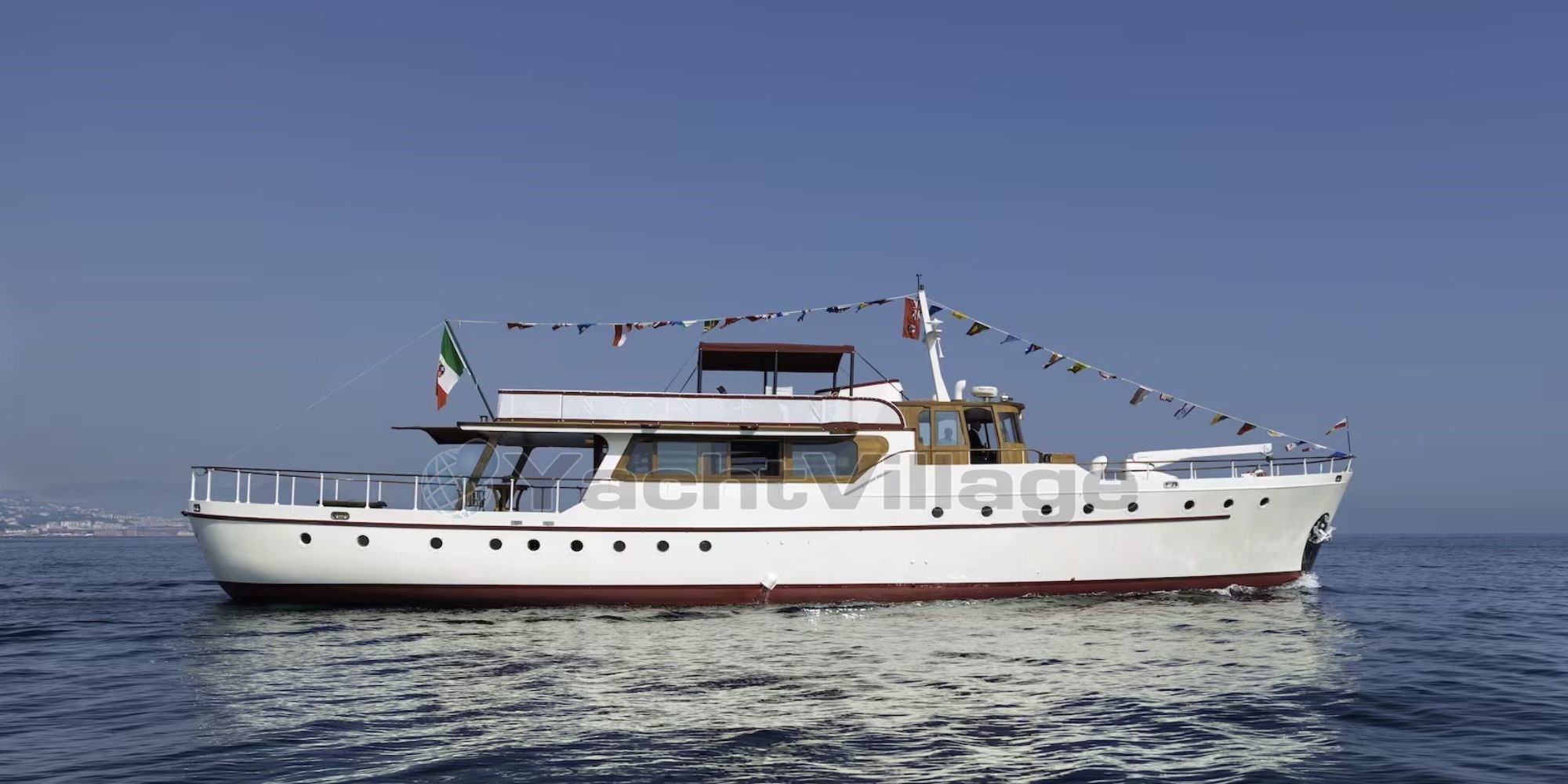
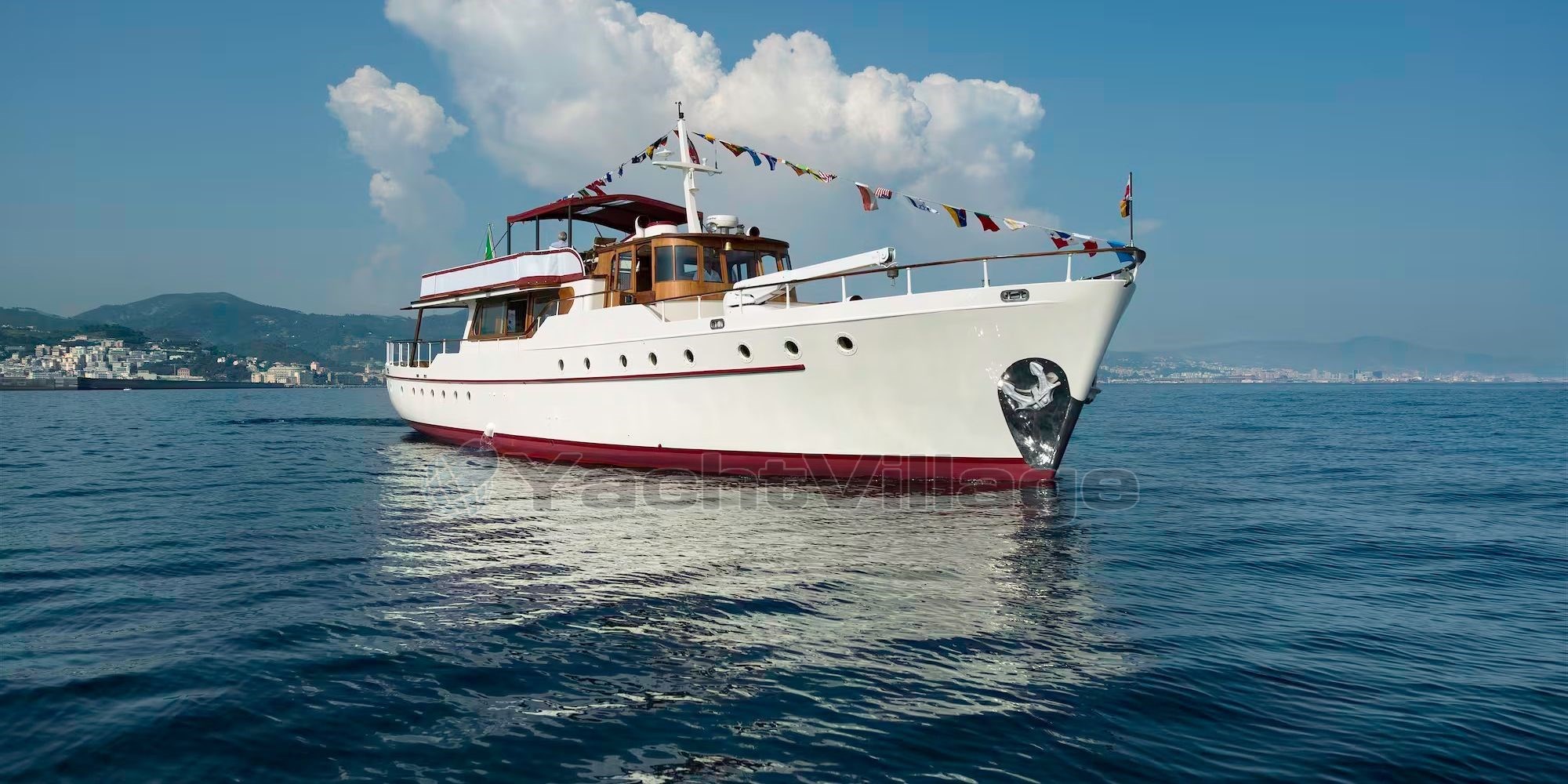
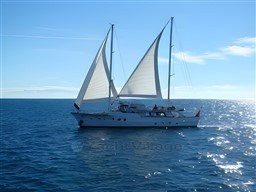
Originally named Claudia, EMERALD was conceived for a US gentleman by the famous motor yachts designer John Bain and was built in 1957 by the Scottish shipyard James A. Silver, as many of the best boats designed by John Bain.
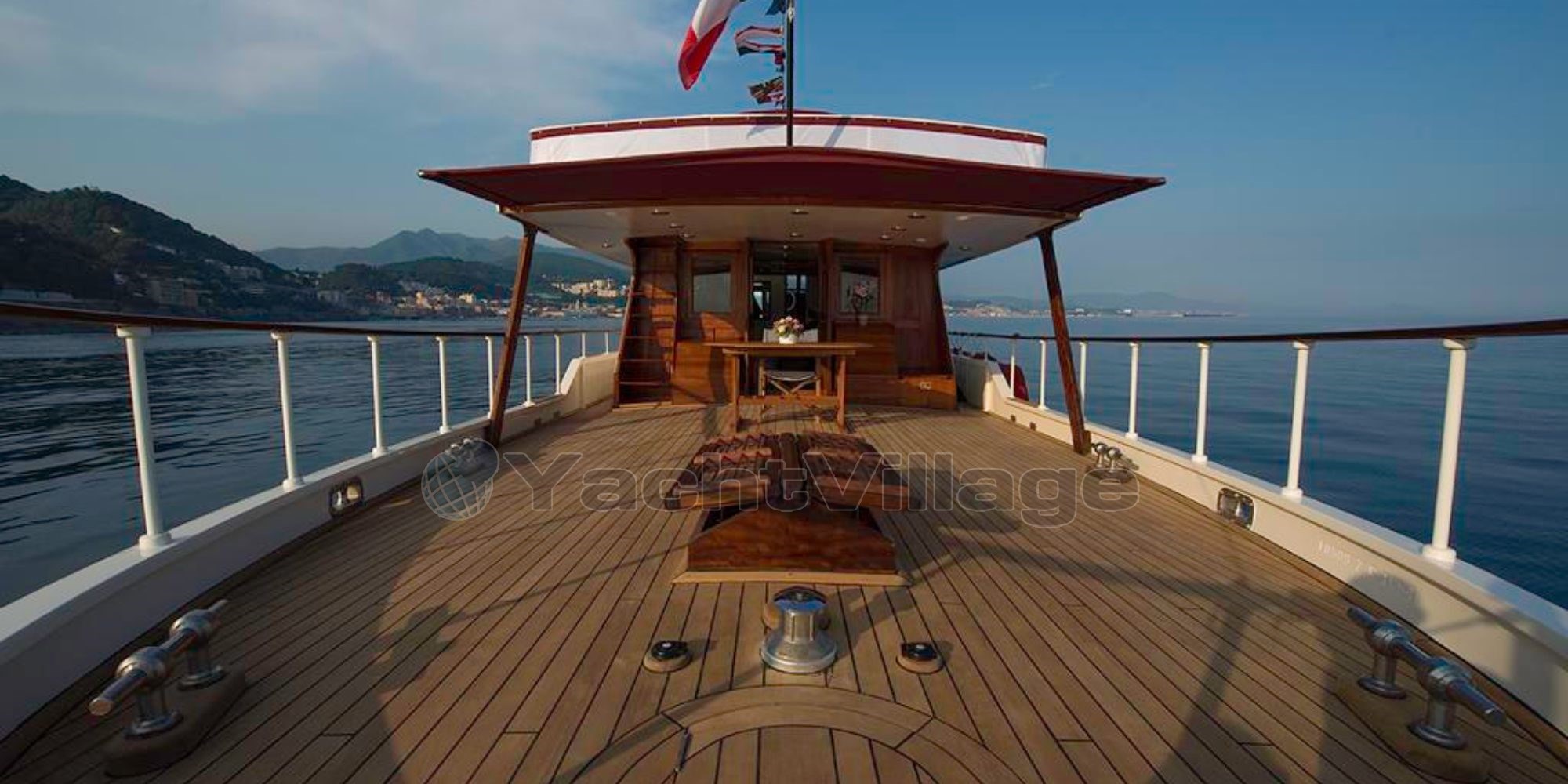
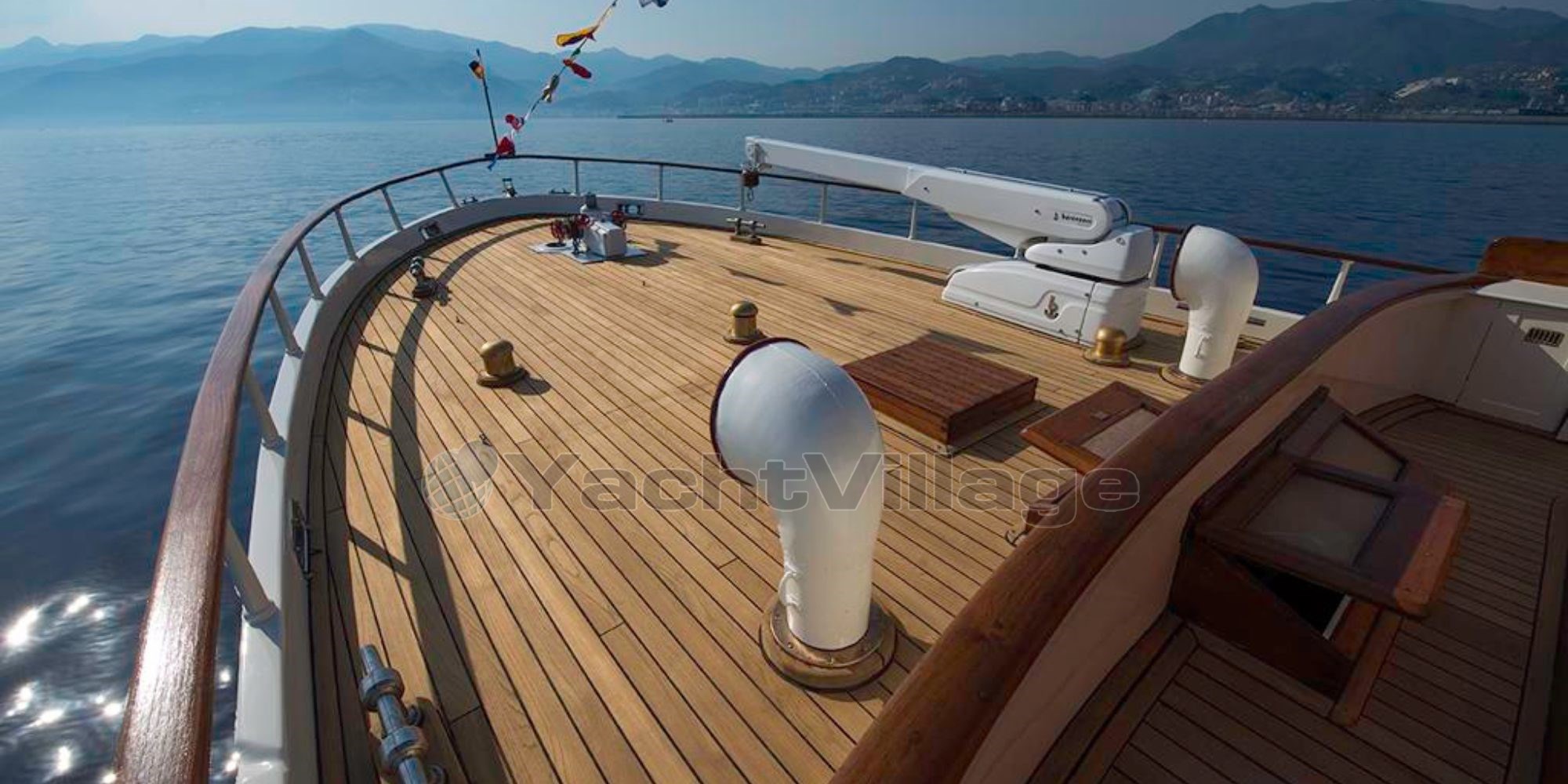
Her noteworthy layout includes three different sections, all equal in size; the bow, the centre, and the stern, featuring large open spaces – a real peculiarity since the ship was conceived to cruise the ocean and the Northern Seas.
After her launch, EMERALD sailed to Philadelphia, USA, where she remained for years, until a Dutch engineer purchased her to live aboard while traveling the world with his wife. He renamed her Kjef.
until the widow decided to sell it again. Kjef was then moved to Catania in Italy, where it caught the attention of its current shipowner.
After the purchase, three members of the Mostes shipyard (Genova, Italy) travelled to Catania to ensure EMERALD’s suitability to sail. Within three months, EMERALD was moved to Genova, where a complete refit began.
Started at the beginning of April 2013 and ended in May of the following year, the process involved 14 full-time people who, especially in the last stages, worked around the clock to meet the agreed deadline.
EMERALD is built entirely out of wood; its double planking is made of 40 mm teak planks (the inner layer mounted at a 45° angle to the outer one), as well as the deck and the deck house. After replacing the deteriorated parts with new ones (steam-bent as in the old days), the planking was fastened by copper rivets and screwed to the framework and to the supporting hull structures. Naturally, the keel was also fixed, along with the helm port and the propeller shafts, usually subject to wear and tear.
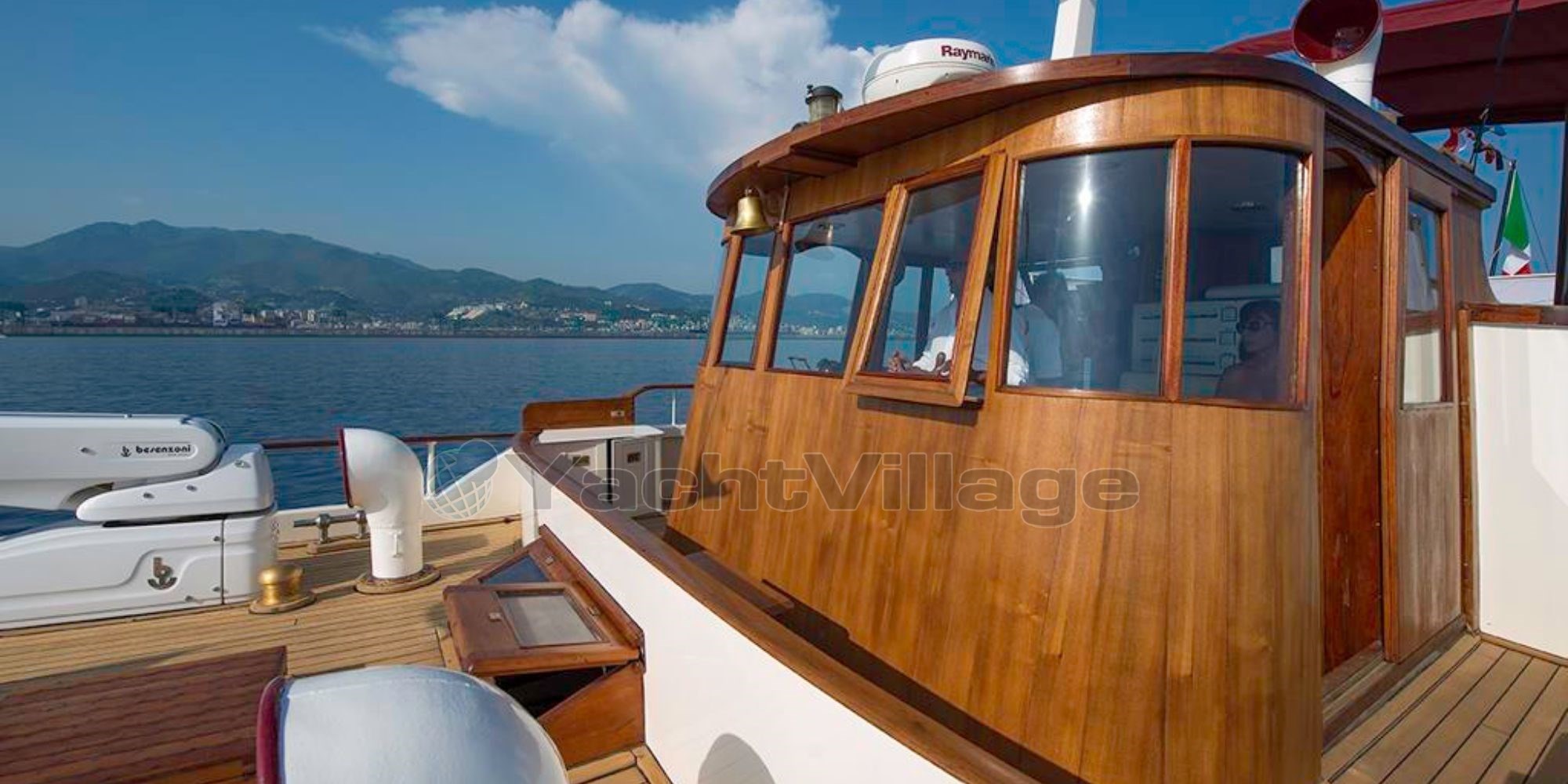
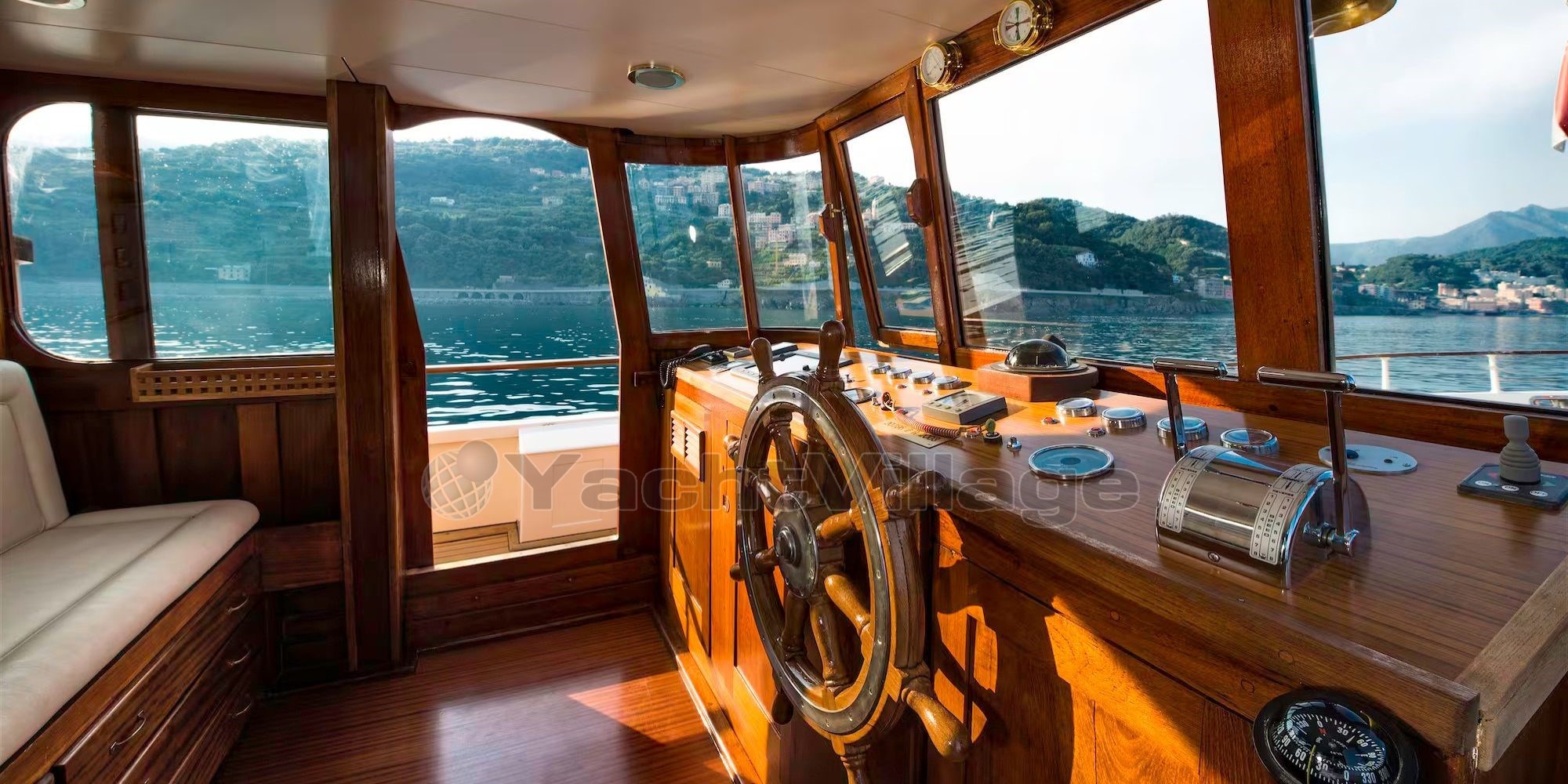
The original bridge area was fully reconditioned. It was disassembled, deeply cleaned, and restored, and some of its elements were replaced with new ones – always with the principles of a conservative restoration at heart. The windows of the bridge were the only parts to be replaced due to the wear of time, but the new, identical elements preserved the flavor of the original.
As for the interior plan, the ship was emptied to the hull, bulkheads included. The electrical system and the air conditioning were rewired, and a new gyroscopic system was implemented, providing outstanding comfort to a ship that would otherwise be subject to roll.
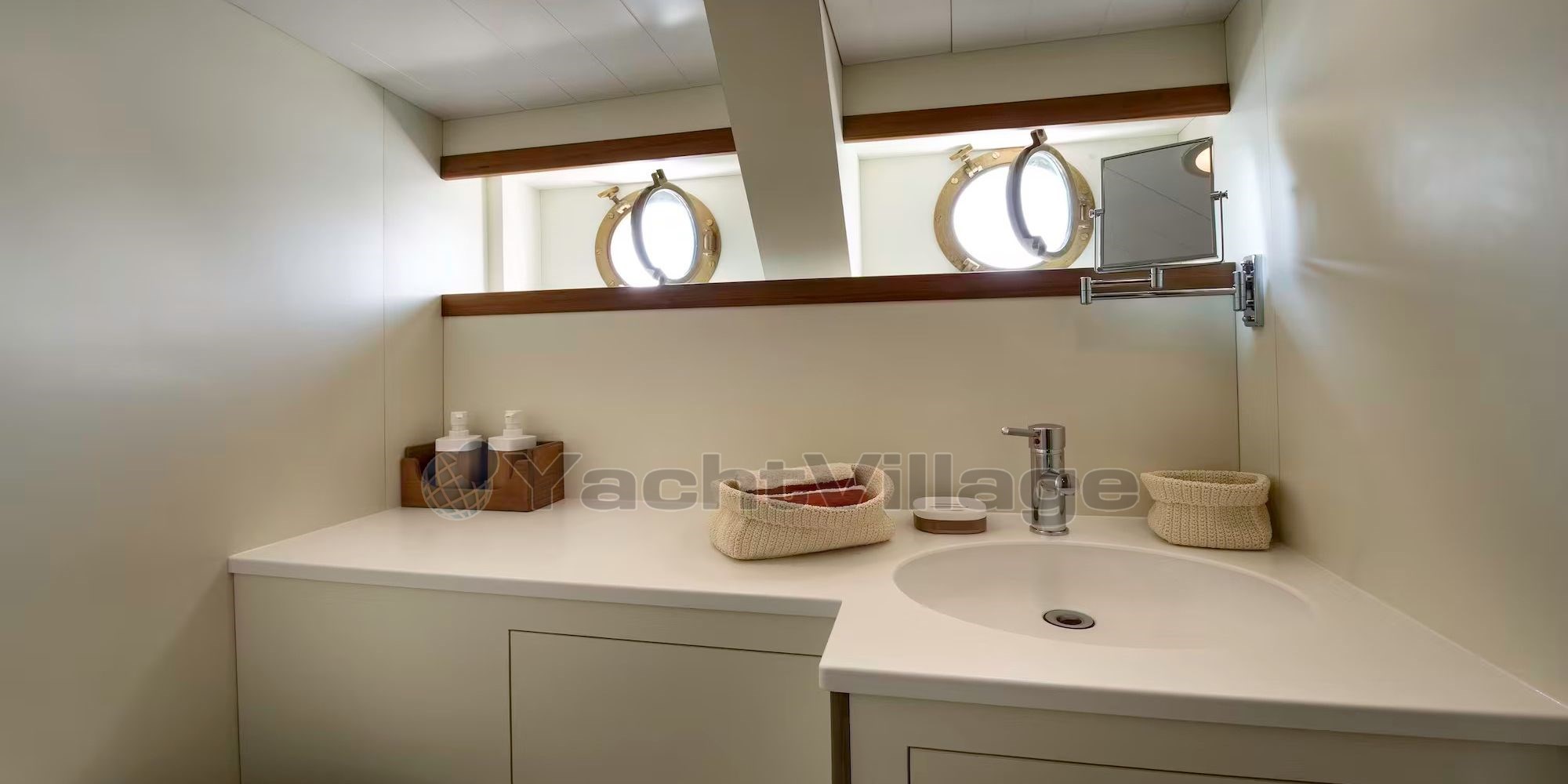
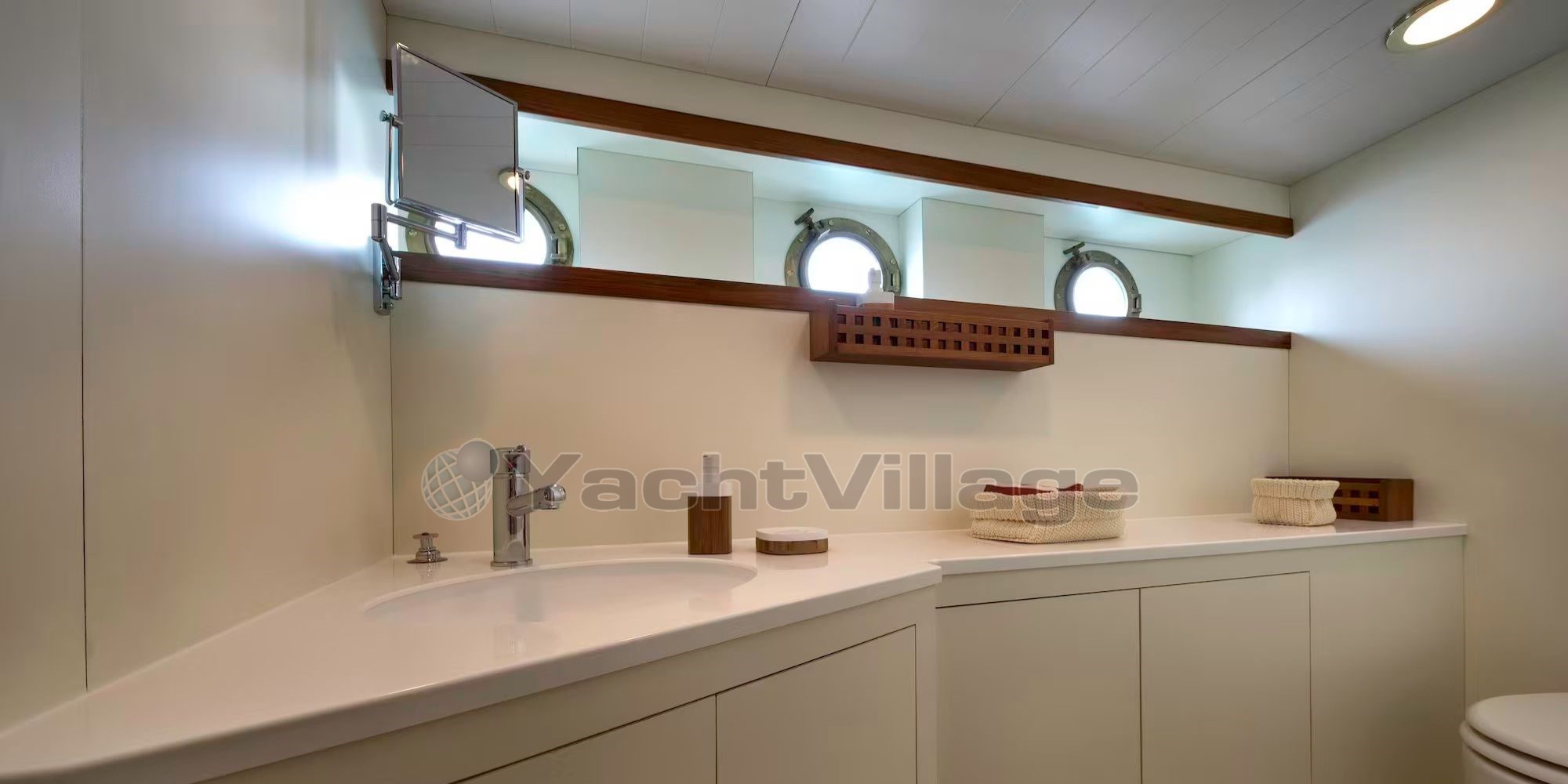
All the portholes and the skylights were disassembled, polished, reassembled, and properly sealed.
The machinery in the engine room was replaced, whilst the original Gardner engines were inspected and accurately overhauled.
Refitting EMERALD was indeed a project of great importance. Delivered with a fast turnaround and to exceptional standards, it was carried out with outstanding passion, both by the shipowner and the Mostes shipyard.
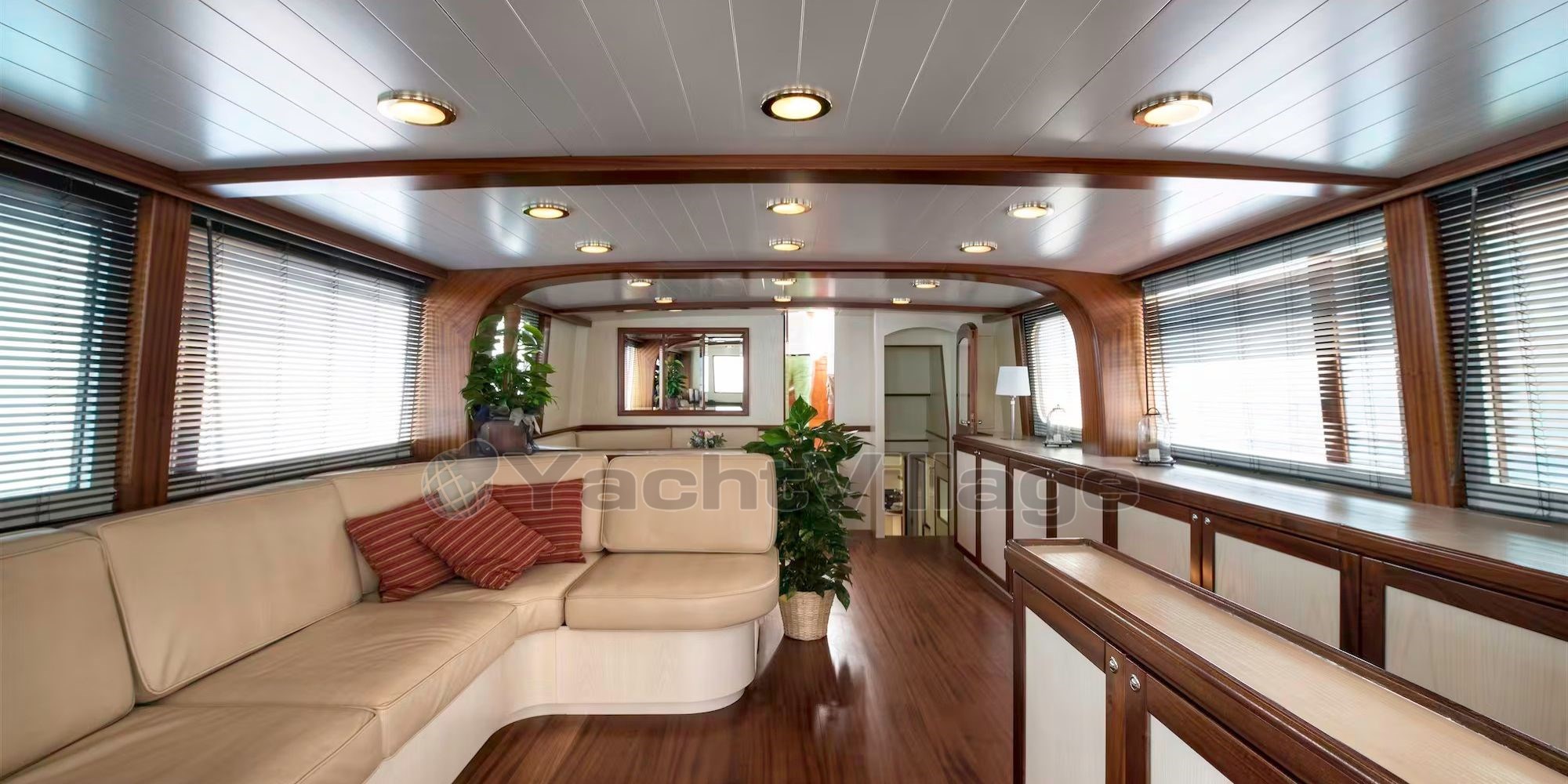
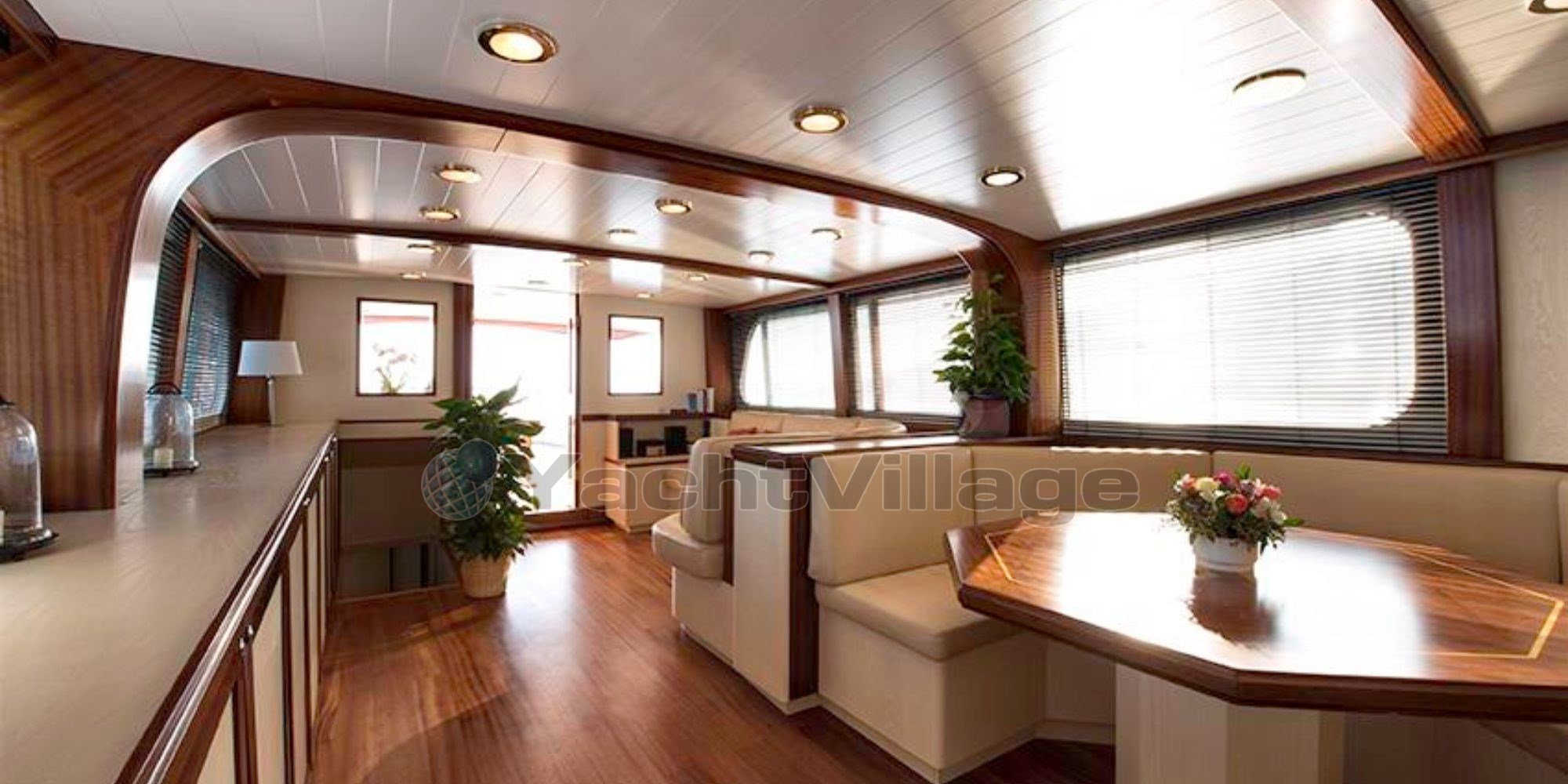
The lounge, completely windowed on the sides and toward the stern, is very bright due to the light colors dominating the space and the natural light penetrating from the windows. The pure white of the ceiling panels, the light shades of the ash furniture boards, the tawny gold of the teak floor, the marine warm tones of the mahogany ceiling structures, and the cream of the upholstery represent the whole colour palette of all the interiors.
At the centre of the lounge, a small ladder brings to the bridge; a very classic and characteristic area with continuous glass panels (with rounded edges) lending a really unique effect.
The rudder wheel has a traditional style, a sofa facing navigation is located under the dashboard, and another small sofa sits beside the wheelhouse.
Under deck toward the bow, the crew area features the galley (with an air-conditioned wine pantry), the captain’s quarters, a double cabin for two sailors, and one head.
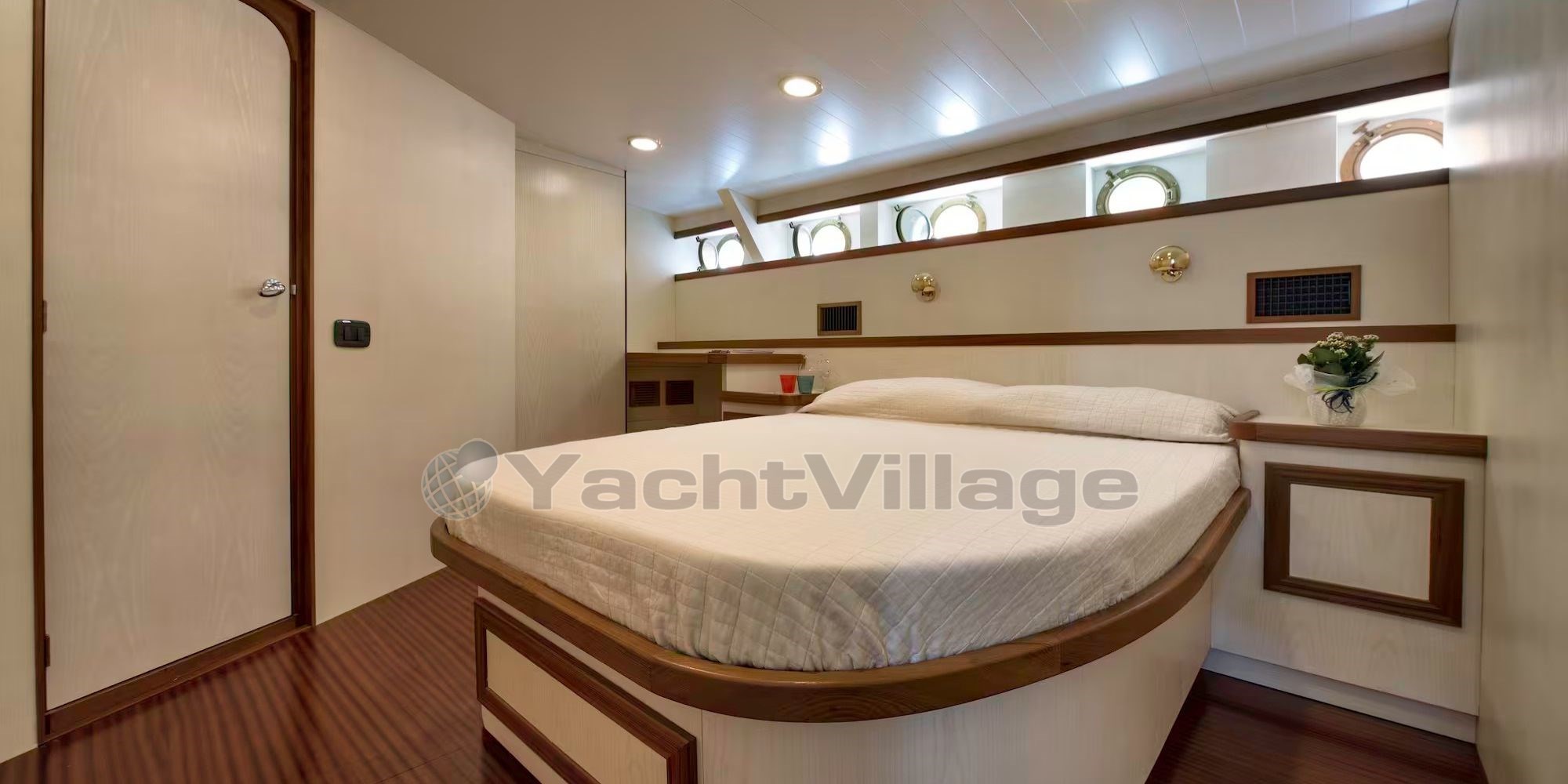
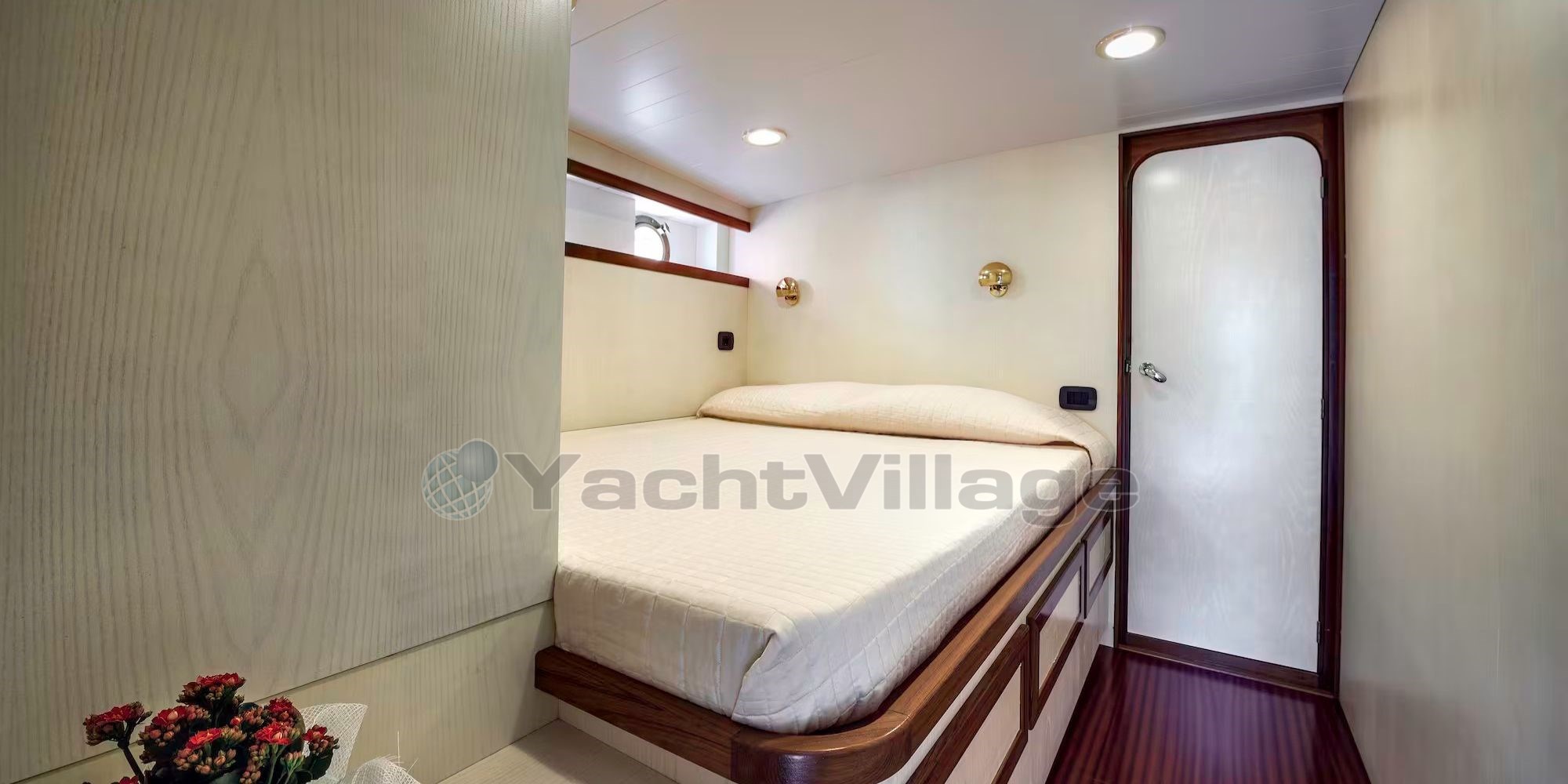
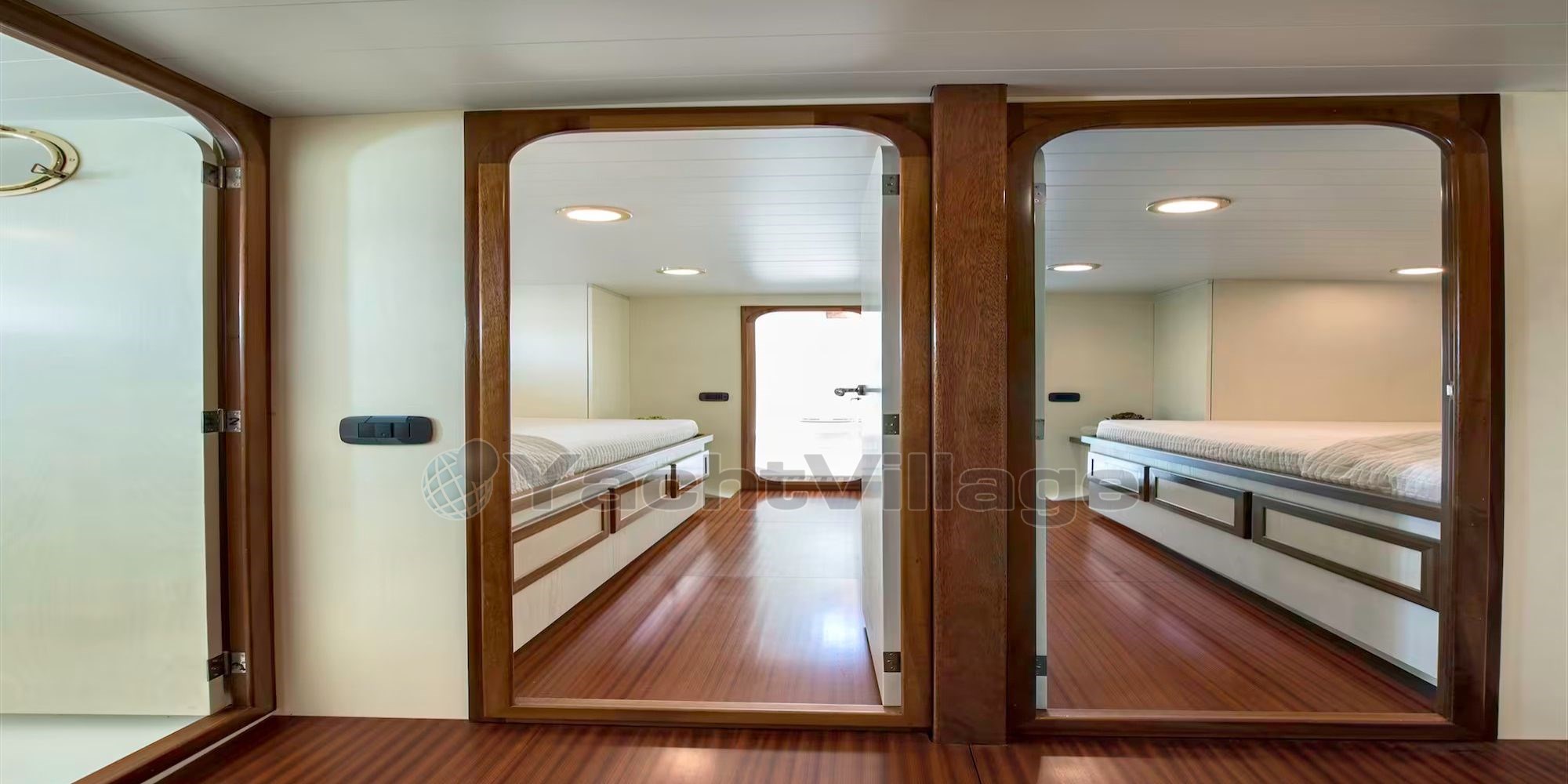
Toward the stern, guests can benefit from a double cabin with a transverse bed and a private head, two identical double cabins with wall beds and a private head, and a guest head in the aisle.
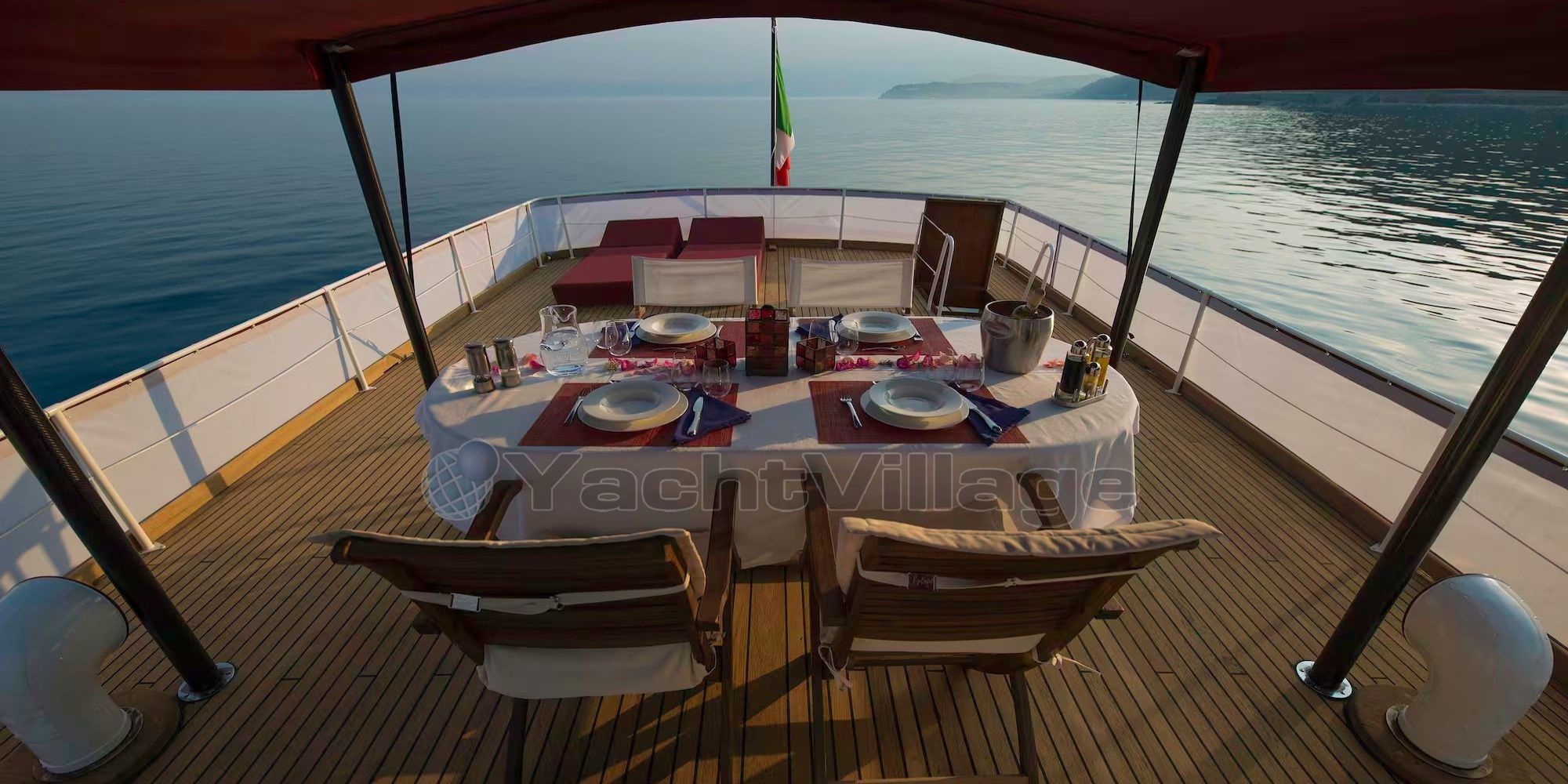
Outside, the very large cock
Her noteworthy layout includes three different sections, all equal in size; the bow, the centre, and the stern, featuring large open spaces – a real peculiarity since the ship was conceived to cruise the ocean and the Northern Seas.
After her launch, EMERALD sailed to Philadelphia, USA, where she remained for years, until a Dutch engineer purchased her to live aboard while traveling the world with his wife. He renamed her Kjef.
until the widow decided to sell it again. Kjef was then moved to Catania in Italy, where it caught the attention of its current shipowner.
After the purchase, three members of the Mostes shipyard (Genova, Italy) travelled to Catania to ensure EMERALD’s suitability to sail. Within three months, EMERALD was moved to Genova, where a complete refit began.
Started at the beginning of April 2013 and ended in May of the following year, the process involved 14 full-time people who, especially in the last stages, worked around the clock to meet the agreed deadline.
EMERALD is built entirely out of wood; its double planking is made of 40 mm teak planks (the inner layer mounted at a 45° angle to the outer one), as well as the deck and the deck house. After replacing the deteriorated parts with new ones (steam-bent as in the old days), the planking was fastened by copper rivets and screwed to the framework and to the supporting hull structures. Naturally, the keel was also fixed, along with the helm port and the propeller shafts, usually subject to wear and tear.
The original bridge area was fully reconditioned. It was disassembled, deeply cleaned, and restored, and some of its elements were replaced with new ones – always with the principles of a conservative restoration at heart. The windows of the bridge were the only parts to be replaced due to the wear of time, but the new, identical elements preserved the flavor of the original.
As for the interior plan, the ship was emptied to the hull, bulkheads included. The electrical system and the air conditioning were rewired, and a new gyroscopic system was implemented, providing outstanding comfort to a ship that would otherwise be subject to roll.
All the portholes and the skylights were disassembled, polished, reassembled, and properly sealed.
The machinery in the engine room was replaced, whilst the original Gardner engines were inspected and accurately overhauled.
Refitting EMERALD was indeed a project of great importance. Delivered with a fast turnaround and to exceptional standards, it was carried out with outstanding passion, both by the shipowner and the Mostes shipyard.
The lounge, completely windowed on the sides and toward the stern, is very bright due to the light colors dominating the space and the natural light penetrating from the windows. The pure white of the ceiling panels, the light shades of the ash furniture boards, the tawny gold of the teak floor, the marine warm tones of the mahogany ceiling structures, and the cream of the upholstery represent the whole colour palette of all the interiors.
At the centre of the lounge, a small ladder brings to the bridge; a very classic and characteristic area with continuous glass panels (with rounded edges) lending a really unique effect.
The rudder wheel has a traditional style, a sofa facing navigation is located under the dashboard, and another small sofa sits beside the wheelhouse.
Under deck toward the bow, the crew area features the galley (with an air-conditioned wine pantry), the captain’s quarters, a double cabin for two sailors, and one head.
Toward the stern, guests can benefit from a double cabin with a transverse bed and a private head, two identical double cabins with wall beds and a private head, and a guest head in the aisle.
Outside, the very large cock
James A. Silver Classic Gentleman Yacht - 900 000 EUR


James A. Silver Classic Gentleman Yacht En vente

Bernard Gallay Yacht Brokerage
+33 (0)4 67 66 39 93
1 Rue Barthez - 34000 Montpellier - France
Données principales
Chantier naval
James A. Silver
Modèle
Classic Gentleman Yacht
Longueur
26
m
Typologies
Motoryacht, Flying bridge
Référence
875309
Dernière mise à jour
30/12/2025
Prix
Prix de vente
900 000 EUR
TVA
TVA comprise
Moteurs
Puissance
2 x 214 Hp
Modèle
Gardner 214 HP 6LXB
Localisation
Pays
Italie
Zone visible
Liguria
Localisation
Genova
Données techniques
Architecte
John Bain
Longueur totale
26
m
Largeur
5,8
m
Tirant d’eau
2,2
m
Vitesse de croisière
10
Kn
Réservoir de carburant
18 000
l
Réservoir d'eau
3 500
l
Consommation déclarée
35
l/h
Pavillon
Italie
Générateurs
Puissance
1 x Kw
Equipements
Equipement électronique de navigation
Anémomètre/Girouette
GPS
Lecteur de cartes
Pilote automatique
Radar
Radio VHF
Sondeur pêche
Equipement de pont
Ancre
Equipement intérieur
Air conditionné
Chauffage (Air Condition)
Equipement de sécurité
Balise de détresse
Gilets de sauvetage
Radeau de survie
Equipement de confort
Congélateur
Four
Four micro-ondes
Lave-linge
Lave-vaisselle
Réfrigérateur intérieur
Sèche linge
Voulez-vous en savoir plus sur ce bateau?
Aménagement
Nombre de cabines
6
Nombre de lits cabins
12
Nombre de lits total
12
Type de cabines

6 x Lit double
Matériaux
Pas de données disponibles
Voulez-vous en savoir plus sur ce bateau?
Autres bateaux qui peuvent vous intéresser...
-
![Image]() Cerrimarine 86 (2008)980 000 EUR
Cerrimarine 86 (2008)980 000 EUR -
![Image]() Falcon Yachts Falcon 86 (2001)990 000 EUR
Falcon Yachts Falcon 86 (2001)990 000 EUR -
![Image]() Colombus Van Voorden 25 M (1972)950 000 EUR
Colombus Van Voorden 25 M (1972)950 000 EUR -
![Image]() Fipa Maiora 24 S (2002)990 000 EUR
Fipa Maiora 24 S (2002)990 000 EUR -
![Image]() Azimut 86s (2008)890 000 EUR
Azimut 86s (2008)890 000 EUR -
![Image]() Azimut 86s (2005)945 000 EUR
Azimut 86s (2005)945 000 EUR
En YachtVillage
© 2026 YachtVillage - Design by Digibusiness Srl - P.IVA IT02184210348 - Powered by Navis.net